Nobody's Holding Your Mouthpiece: Why You Need a Corner Before Your First Bell
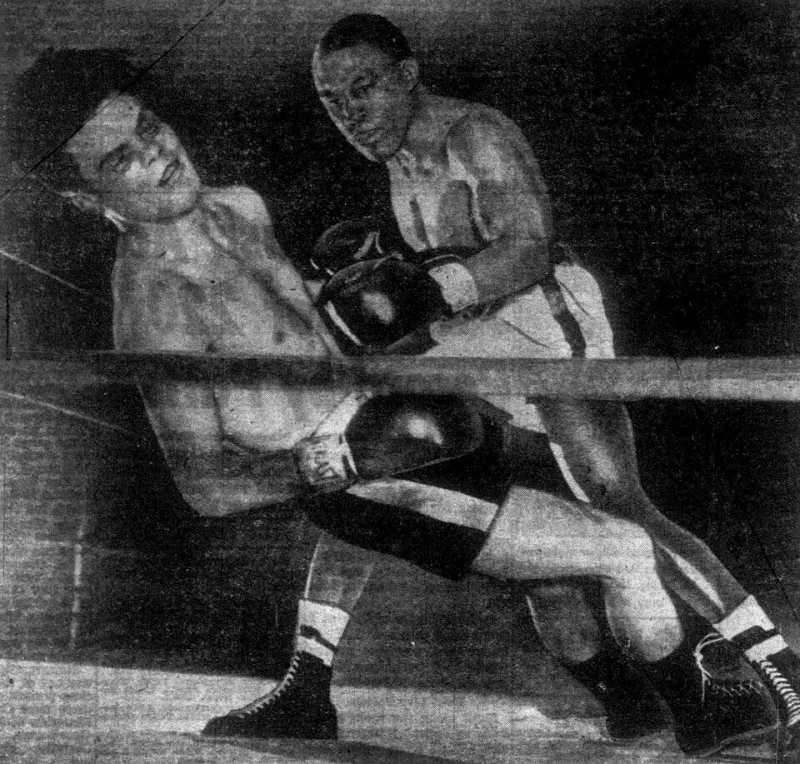
Photo: Unknown, Public domain, via Wikimedia Commons
Here's a scene that plays out at every amateur Muay Thai show in America, from VFW halls in Ohio to hotel ballrooms in Vegas: a fighter walks out alone, wins or loses three rounds of chaos, and spends every single rest round staring at a referee who won't make eye contact. No water. No advice. No idea that they've been dropping their right hand every time the other guy feints.
That fighter trained for months. Probably paid a registration fee, cut weight, and drove hours. And they showed up to the most important day of their fighting life with nobody in their corner.
We spend a lot of ink on training plans, gear lists, and weight cuts on this site. But the corner might be the single most neglected piece of amateur Muay Thai in the United States. So let's fix that.
What a Corner Actually Does (It's More Than Water)
A good second does four jobs in roughly 60 seconds:
1. Damage control. They look at your face. They check the cut above your eye, the swelling on your cheekbone, the leg you've been eating kicks on. They tell the referee if something's wrong before you're too adrenaline-soaked to notice.
2. Translation. Your opponent has been showing you patterns for two rounds. You're too busy getting punched to see them. Your corner isn't. "He steps in before every hook. Check the leg. He's tired — walk him down." That's the job.
3. Regulation. Fighters hyperventilate between rounds. A corner controls your breathing with two words — "Slow. Nose." — and hands you water you didn't know you needed.
4. Emotional anchoring. Fight adrenaline is a liar. It tells you you're losing when you're up, or winning when you're getting picked apart. A corner is the one honest voice in the room.
None of that happens if your second is a guy from the gym who's never done it, or worse, nobody at all.
"My Gym Doesn't Do Corners" — Yeah, Mine Either
Plenty of American Muay Thai gyms are small. Maybe the coach is working the card, or running the scale table, or there are three other fighters on the same show. So the corner duty falls to... whoever.
Here's the good news: you don't need a veteran trainer with 30 years of pads. You need a competent adult who's watched you train, can follow a script, and won't panic. That's it. Your best sparring partner checks every box.
How to recruit one:
- Ask early — like, six weeks out. "Hey, I've got a fight on the 14th, would you corner me?" gives them time to say yes and learn the job. Asking the night before gives them a great reason to say no.
- Pick someone calm, not someone loud. The corner is not a hype position. You want the training partner who talks you through bad rounds in sparring, not the one who screams.
- Bring them to the rules meeting. Amateur rules vary by state commission and promotion — elbow legality, clinch time limits, knee restrictions. Your corner needs to know what's allowed so their advice matches the rulebook.
- Run it in the gym. Do two rounds of sparring where your corner sits on a stool and talks to you between rounds. Yes, it feels silly. Do it anyway.
The One-Minute Script: What Should Actually Be Said
The between-round window is brutally short. Your corner gets maybe 45 seconds of talking time, and half of that should be silence while you breathe. So the words have to be few and specific.
Round 1 rest: Mostly observation. "You're okay. Breathe. Hands are dropping when he throws the feint — keep 'em up." No game plans yet. You're still gathering data.
Round 2 rest: First real adjustment. One or two corrections, max. "He's stepping in before the hook — check the kick, catch and return." More than two instructions and you'll remember none of them.
Round 3 rest: Motivation plus one reminder. "You're up on the cards. Don't give away the last two minutes. Hands up, walk forward." Late rounds are about will as much as technique.
If you're cut: Cold towel, direct pressure, Vaseline re-applied by the cut man if the promotion has one (ask at check-ins — some do, most don't at the amateur level). The corner's job is to keep the referee from waving it off: "He can see fine. It's shallow. Give him the round."
If you're getting beat up: Honest, calm damage control. "Protect the leg, survive this round, we adjust after." A corner who screams "throw everything!" at a hurt fighter is a corner you never bring again.
Your Printable Corner Cheat Sheet
Hand this to whoever's in your corner. Seriously — print it.
BEFORE THE FIGHT
- Know the ruleset (elbows? clinch length? knee count?)
- Locate the cut man / doctor / ice
- Water bottle, cold towel, Vaseline, gauze, spare mouthpiece case
EVERY ROUND
- Look at the face first (cuts, eyes, swelling)
- Check the lead leg
- Two words max on breathing: "Slow. Nose."
- One or two corrections — never a speech
- Water in small sips, out of the way of the ref's count
RED FLAGS — TELL THE REFEREE
- Fighter can't track you with their eyes
- Cut is gushing or inside the eyebrow
- Leg kick has them limping on the return
- They don't remember the round
FINAL 10 SECONDS OF EVERY REST
- "Hands up. Breathe. Go."
The Bottom Line
Muay Thai is an individual sport performed by a team. The nak muay in Thailand has a corner who's seen a thousand fights. The amateur in the US often has a roommate with a Gatorade.
You can't control the judging, the matchmaking, or the guy cutting weight next to you. But you can control whether someone knowledgeable is sitting on that stool when the bell goes. Ask your training partner this week. Write the script. Print the sheet.
Because the loneliest place in combat sports isn't the ring — it's the stool nobody's sitting next to.