From the Scale to the Final Bell: A Beginner's Map to Your First Amateur Muay Thai Fight
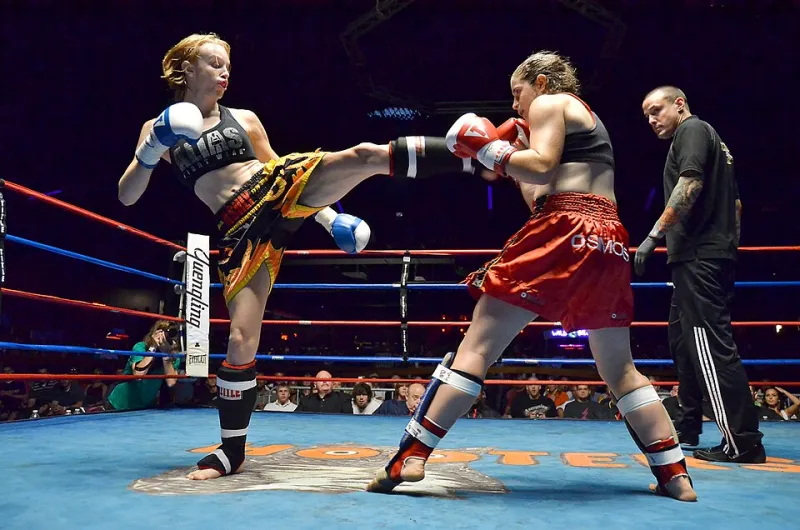
Photo: Eric Langley, CC BY 2.0, via Wikimedia Commons
You've been training for months. You told your coach you want a fight, you signed the waiver, and now it's real: you're on an amateur card three Saturdays from now. The nerves aren't about the opponent. They're about the unknown. So let's kill the unknown.
Here's what fight day actually looks like at a typical US amateur event — the VFW hall kind, the hotel ballroom kind, the kind where the ring was assembled that morning and the DJ is testing the mic over warm-ups.
The Night Before: Weigh-Ins and Packing
Most amateur shows in the US run weigh-ins either the night before or the morning of, and unlike the pros, there's rarely a big drama around it. You'll step on a scale — often a cheap digital one on a folding table — and confirm you're at or under your agreed weight. If you're a pound over, most amateur promotions give you time to sweat it out. Don't plan on needing that grace period. Show up on weight.
Pack your bag the night before:
- Gloves (check if the promotion provides them — many amateurs use loaner gloves)
- Hand wraps (two pairs, always)
- Mouthguard (and a backup if you can)
- Groin protector, shin guards (some rulesets require them for amateurs)
- Fight shorts, extra shirt, sandals
- Water and easy-to-digest snacks
- Your ID and any registration paperwork
Morning: Nothing Dramatic
Eat a normal breakfast. Something you've eaten a hundred times before — fight day is not the day to discover oatmeal disagrees with you. Go for a light walk. Watch film if your coach sent any. Then do your best impression of a person who is relaxed.
Arrival and Check-In: Two Hours Out
Most shows ask fighters to arrive 90 minutes to two hours before the first bout. You'll check in with the matchmaker or a table near the entrance, show your ID, and get a fighter wristband or hand stamp. Then you find the staging area — usually a back room, a hallway, or a corner of the gym next door.
This is where the pre-fight ecosystem lives: fighters stretching, coaches holding pads, somebody shadowboxing furiously in a hallway next to a vending machine. Find a spot. Set up camp. Stay warm and stay out of the way.
The Rules Briefing: Pay Attention, Seriously
Before the card starts, the referee or a commission official gathers all fighters for a rules briefing. This is where you find out exactly what you're walking into, and it varies more than you'd think:
- Modified Muay Thai is common at the amateur level — no elbows, limited or no clinch strikes to the head, sometimes limited knees
- Full rules Muay Thai allows elbows and extended clinch, but only at certain experience levels and ages
- Some state athletic commissions (California and Florida run their own amateur structures) have specific round lengths and equipment requirements baked in
Ask questions here. "Are knees to the head allowed?" is not a dumb question. "Is a knockdown eight-count or three-knockdown rule?" is not a dumb question. The referee would rather answer it now than figure it out mid-fight.
Hand Wraps and Equipment Checks
An official will inspect your hand wraps — usually checking length and that no wrap crosses your knuckles illegally. If the promotion supplies gloves, you'll get them at this point, and they'll be taped or signed so they can't be swapped. Mouthguard check usually happens at the ring steps before your bout.
Cornering: Who's in Your Corner
You get cornerpeople — usually two. One works the stool and the ice bag between rounds; the other gives you the actual coaching. Pick people who are calm. A corner that screams contradictory advice is worse than an empty one. Your coach should have already told you what the game plan is. Fight night is not the time for a new game plan.
Backstage: The Waiting Game
Fights run early or late, never on time. Stay loose, keep eating small amounts of carbs if you're hours out, and drill your entrance in your head a hundred times. When the matchmaker calls your name, you'll do gear check, get gloved up, and wait at the staging area for the bout before yours to end.
The Walk, the Fight, the Bell
The walk to the ring is short. Touch gloves, hear the referee's instructions — "protect yourself at all times" is a legal requirement, not a slogan — and then it's just sparring with an audience.
And here's the honest truth about your first one: the audience is small, the lighting is bad, and half the crowd is watching the nacho line. Twenty people at a VFW hall in Ohio or Texas or wherever you are. The fight you've been imagining in your head for months happens in front of a crowd quieter than your gym on a Tuesday.
That's a gift. Use it.
After the Bell
Win or lose, there's a protocol: touch gloves again, listen for the decision, bow to your opponent's corner. Then ice, food, and the best sleep of your life.
The first fight is never your best fight. It's the fight that makes your second one possible. Get through the unknown — and now you know it.