More Than a Dance: What the Ram Muay Actually Does to Your Fight (and Why Your Gym Skips It)
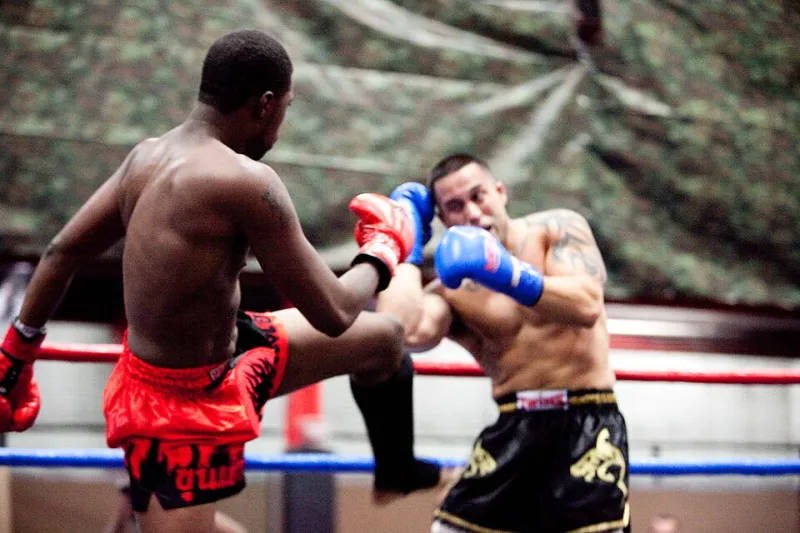
Photo: David Maiolo, CC BY-SA 3.0, via Wikimedia Commons
Walk into most Muay Thai gyms in America and ask about the ram muay. You'll get one of two responses: a shrug, or a ten-second demonstration that looks like someone stretching with extra steps.
In Thailand, this is unthinkable. The wai kru ram muay — the ritual dance performed before a fight — is as fundamental as the teep. Masters like the late Kru Yodtong Senanan built entire legacies on the belief that a fighter who doesn't honor the ritual hasn't finished learning the art. So what are we missing?
The Ritual Is a Warm-Up for Your Nervous System
Ask any Thai trainer what the ram muay is for and they won't start with spirituality. They'll start with breathing.
The slow, deliberate movements force you to control your breath while your heart is trying to claw out of your chest. You walk the ring, you seal the corners, you drop to your knees at the mongkon's symbolic center. Every second of it is a pacing exercise. By the time the ritual ends, your breathing pattern is set — the same pattern you'll need between rounds.
Fighters who blow through the ritual or skip it tend to come out hot: swinging wide, gassing in round two. Fighters who use it come out settled. That's not mysticism. That's composure, rehearsed.
What the Movements Actually Mean
The ram muay isn't one standardized routine — every camp has its own version, often passed down like a family recipe. But the skeleton is consistent:
The wai kru (round one). Kneeling, bowing three times — to Buddha, the dharma, and the sangha in traditional camps, or more loosely to your teachers, your parents, and the art itself in secular ones. Either way, you're acknowledging that you didn't get here alone.
Sealing the ring (round two). You walk the perimeter, pressing your palms to the ropes at each corner. Traditionally, this keeps bad spirits out and your spirit in. Practically? You're learning the ring. Distance, texture, the give of the canvas. Every veteran does this unconsciously — the ritual just makes it deliberate.
The yaang sam khum. The three-stance shuffle, forward and back. It's the footwork drill you did on day one, dressed in ceremony. Your body is rehearsing its base before someone tries to take it from you.
The personal flourishes. This is where fighters tell their story. Some mimic archery (the legend of Nai Khanom Tom and the captured warrior who fought his way free). Some mimic a swallow in flight, a swimmer, a soldier checking a sword. Watch old Saenchai footage and you'll see playfulness in the ritual itself — a signal that says I'm loose, and you should be worried.
Why American Gyms Skip It (and Why That's a Mistake)
The usual excuse is time. Amateur cards in the US run long, the athletic commission wants warm-ups done efficiently, and nobody wants to explain a two-minute dance to a promoter on a schedule.
But there's a deeper reason: we imported the sport and left the culture in customs. That's like learning guitar tabs without ever hearing the song. The techniques work — obviously, they work — but the ritual is part of what trains the mindset the techniques live inside. Composure, respect, ring awareness, breath control. All of it is embedded in the dance we treat as optional.
How to Start Learning It When Your Gym Doesn't Teach It
Good news: nobody's stopping you.
- Learn the basic wai kru first. Kneel, hands to forehead, three bows. That's the foundation and it's learnable in an afternoon from any number of videos filmed in Thai stadiums.
- Pick a simple camp-style ram muay. Don't choreograph a Broadway number. A straightforward walk, seal, and yaang sam khum is plenty. Ask a Thai trainer — in person or online — if your version looks right. They will absolutely have opinions.
- Perform it before hard rounds in training. Do your ritual, then spar. You'll notice how it changes your first thirty seconds. That's the lesson.
- Wear the mongkon and pra jiad with respect, or not at all. If your gym gives you one, fine. If not, don't buy a blessed headband off the internet and wear it to a smoker. Some things you earn.
The Round Before the Fight
Old-school masters say you can't skip the wai kru because, to them, the fight doesn't start when the bell rings. It starts when you step over the ropes. Everything you do in that ring before your opponent touches you is either building your calm or spending it.
The ritual is free coaching. Take it.