Sleep Is the Only Supplement That Works: A Budget Recovery Guide for the Broke Nak Muay
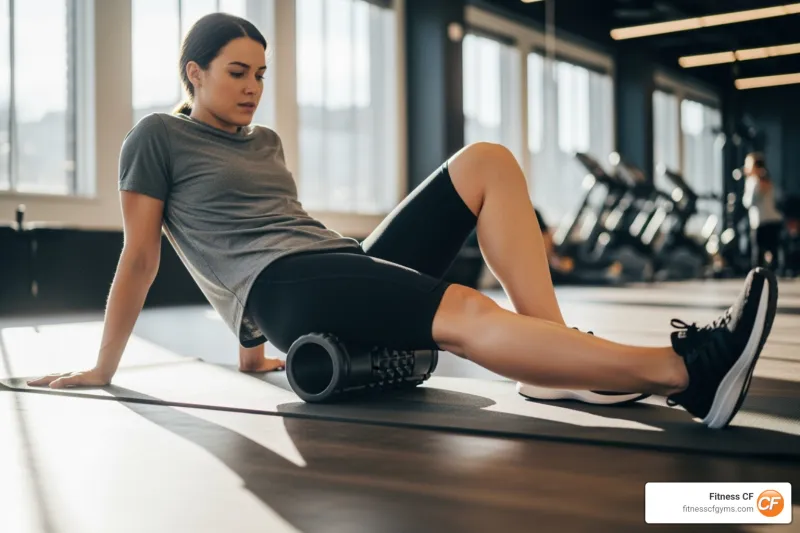
Photo: athlete foam rolling legs home gym recovery, via images.bannerbear.com
Here's a fun exercise: walk into any amateur Muay Thai gym in America and count the recovery tools. The percussion gun someone's dad bought off a Facebook ad. The compression sleeves. The guy who swears by his post-training ice bath like it's a personality trait.
Now count how many of those people are getting eight hours of sleep.
That's the whole article, honestly. But you clicked, so let's do this properly — a ranked rundown of what's worth your money, your time, and your dignity when you're running two-a-days on a budget that doesn't include "wellness."
Tier 5: The Essentials (Free or Nearly Free)
Sleep. Boring answer, correct answer. Sleep is when your body actually repairs the damage you did at pads, and there is no gadget that replicates it. Seven to nine hours. Consistent schedule. Dark room. If you're staying up until midnight scrolling fight highlights and then wondering why your hips are welded shut for the 7 a.m. session, that's not a recovery problem — that's a decision problem.
Food and water. Not a nutrition guide, just a reminder: you can't recover from a hard clinch session on an iced coffee and vibes. Protein at every meal, carbs around training, and a water bottle you actually refill. If your pee looks like apple juice, fix that before you buy anything.
Walking. On your off day, a 30-minute walk does more for stiff legs than most recovery products on the market. Blood flow is the whole game, and walking is the cheapest pump there is.
Tier 4: The Foam Roller (The One That Earned Its Keep)
Remember that foam roller you bought in January with your gym resolutions? Congratulations — it's the only piece of recovery gear that actually pays rent. Ten minutes on your IT bands, quads, and glutes after training isn't magic, but it's cheap, it works well enough, and it lasts forever. A $30 roller beats a $300 massage gun for anyone on an amateur paycheck. Pair it with a $12 lacrosse ball for the hips and you've covered 90% of what the fancy stuff does.
Tier 3: Mobility Work (Five Minutes, Not Forty)
Full disclosure: most mobility routines are too long, which is why nobody does them. You don't need a 45-minute yoga flow. You need five targeted minutes after training — hip openers, ankle rocks, thoracic twists — aimed at the joints Muay Thai beats up most. Do it while your dinner's in the microwave. Consistency beats duration every time.
Tier 2: Cold, Heat, and the Truth About Ice Baths
The ice bath has a PR team. Here's the honest read: cold plunges blunt soreness and feel heroic, but some research suggests they can dampen the adaptation you're chasing if you do them right after training. If you love them, do them on days you're not trying to build — or at least wait a few hours after the session.
Contrast showers (hot-cold-hot) give you most of the subjective benefit for free in your own bathroom. And plain old heat — a hot bath with Epsom salts, a $25 heating pad on the low back — is underrated for loosening up the night before hard training.
Tier 1: The Snake Oil Zone
Skip these or at least lower your expectations:
- Most supplements. The short list that's actually backed by decent evidence: creatine, vitamin D if you're deficient, and caffeine before training. Everything else in the shiny tub is mostly marketing.
- Compression gear as therapy. Fine for warmth and comfort. Not recovery.
- The $6,000 cold plunge. Your bathtub and a bag of ice cost forty bucks.
The Bottom Line
Recovery isn't a product, it's a hierarchy: sleep, food, water, movement — then the cheap tools — then, maybe, the fun stuff. Your body doesn't know what you spent. It only knows whether you gave it what it needs. Train hard, recover like it's part of the job, and save the plunge-pool money for your next pair of gloves.