One Stance Is a Handicap: Building the Switch Game American Gyms Never Taught You

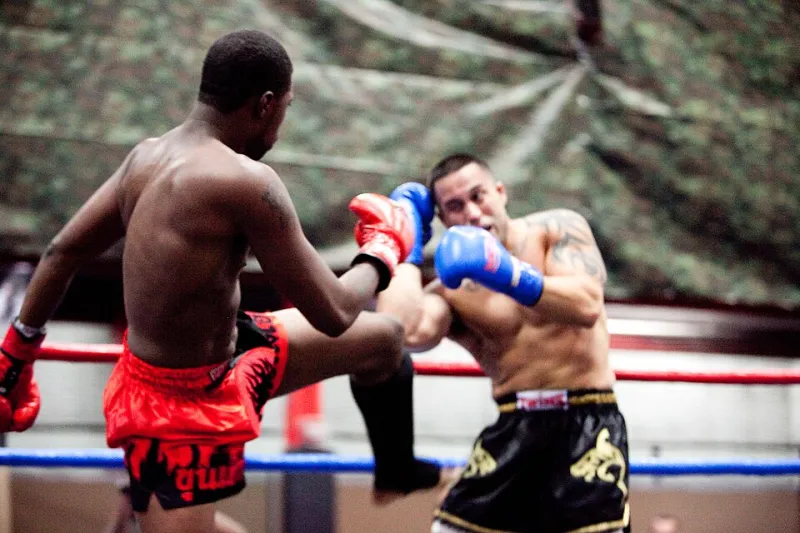
Photo: Saulo Clay, Public domain, via Wikimedia Commons
Watch ten rounds of amateur Muay Thai at any tournament in the US — Texas, Iowa, wherever — and count how many times you see a fighter change stance on purpose. You'll be counting on one hand. Maybe zero.
Now watch Saenchai in his prime. Sitthichai today. These guys don't have a stance. They have a menu.
Somewhere along the line, American gyms decided that switching stances was a party trick — something you mess around with at the end of class, not a real weapon. That attitude is a leftover from our kickboxing roots, and it's quietly costing us rounds, fights, and opportunities. Let's fix that.
Why We're All Stuck Orthodox
Most gyms in the States teach orthodox on day one and let southpaws figure themselves out eventually — usually after getting chewed up in sparring for a few months. The logic is understandable: depth first, variety later. But there's a difference between building a foundation and building a cage.
The deeper problem is cultural. American fight culture borrowed heavily from Dutch kickboxing and early MMA, both of which reward a committed, planted stance. Switching feels risky. It feels like showing off. Coaches worry you'll get caught mid-transition eating a liver kick, so the safe answer is "pick one and stay there."
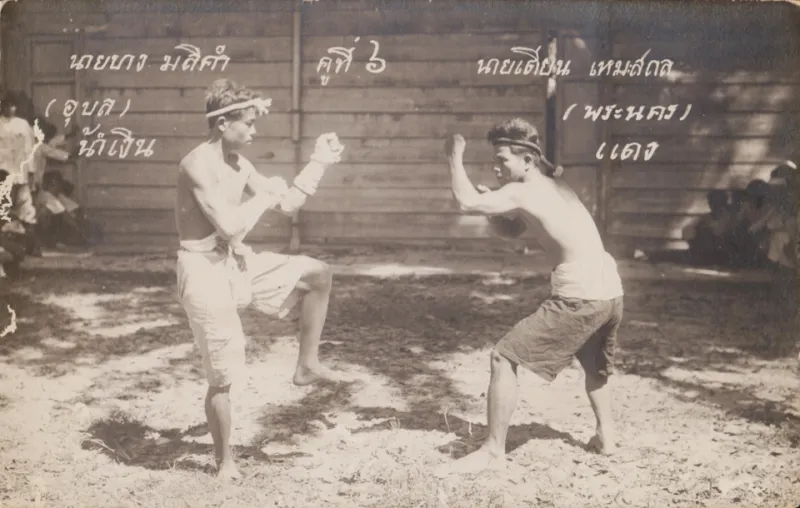
Meanwhile, in Thailand, kids grow up sparring against every stance imaginable, from every gym, every week. Switching isn't a gimmick there — it's problem-solving. If your opponent's lead leg is giving you trouble, you flip your stance and suddenly their entire defense is upside down. No drama, no ego. Just a new angle.
What the Masters Are Actually Doing
Saenchai is the obvious highlight reel, but watch him closely and you'll notice the switches aren't random. He changes stance to create angles for his cartwheel kick, to bait a response, or to reload a lead weapon that's been neutralized. Every switch has a receipt attached.
Sitthichai is the better study for us mortals. He's not doing anything flashy — he switches to bring his power hand and power kick to fresh lines of attack. Orthodox for a few exchanges, then southpaw, and suddenly the kick you blocked is now coming from the other side with different timing. His switching is boring in the best way: economical, repeatable, brutal.
The lesson? You don't need Saenchai's creativity. You need Sitthichai's discipline. One or two switch triggers, drilled until they're automatic.
Three Drills to Steal Five Percent
You're not rebuilding your game tomorrow. You're adding a floor to it. Here's how:
1. The Jab-Flip Drill. On the heavy bag, throw two orthodox jabs, then step through into southpaw and throw two southpaw jabs. Step back. That's it. You're training the transition itself — the footwork, the balance, the moment of vulnerability. Three rounds a week and the flip stops feeling like a trip hazard.
2. Trigger Sparring. In light sparring, pick ONE switch trigger: "when my lead leg kick gets checked, I switch stance and throw the opposite-side roundhouse." Don't switch for any other reason. One trigger, one response, drilled in live rounds until you stop thinking about it. Then add a second trigger in a month.
3. The Mirror Round. Shadowbox a full round where you only throw southpaw combinations, even if you're orthodox. Your brain will scream. Push through. This builds the comfort that makes in-fight switching possible — you can't flip mid-exchange if southpaw feels like a foreign country.
Sparring Against a Switcher Without Losing Your Mind
So what happens when the situation reverses and someone flips stances on YOU? Most people panic because their reads are stance-dependent — "his lead leg is open, his right hand is the danger." A switcher deletes all of that mid-round.
The antidote is to stop reading stances and start reading hips and shoulders. The hips tell you where the power is coming from before the feet finish moving. Watch the hips, not the feet, and a stance change becomes information instead of a jump scare.
Second tip: make them pay for the transition. The switch step is a moment of reduced balance — one well-timed teep or low kick as they flip and suddenly switching gets very expensive. You don't have to punish every switch. Punish one, early, and watch how quickly they stop flipping.
Start Small, Start This Week
None of this requires you to become Saenchai overnight. It requires admitting that one stance is, frankly, a handicap — and that the fix is boring, repeatable drilling rather than highlight-reel heroics.
Add the jab-flip to your bag work this week. Pick your switch trigger before your next sparring session. Five percent of switching in your game puts you ahead of ninety percent of the amateur field in this country.
The Thais never treated stance as identity. It's just a question — and questions have more than one answer.