170 on the Scale, 155 in Your Head: How to Pick a Fight Weight That Won't Ruin Your Debut
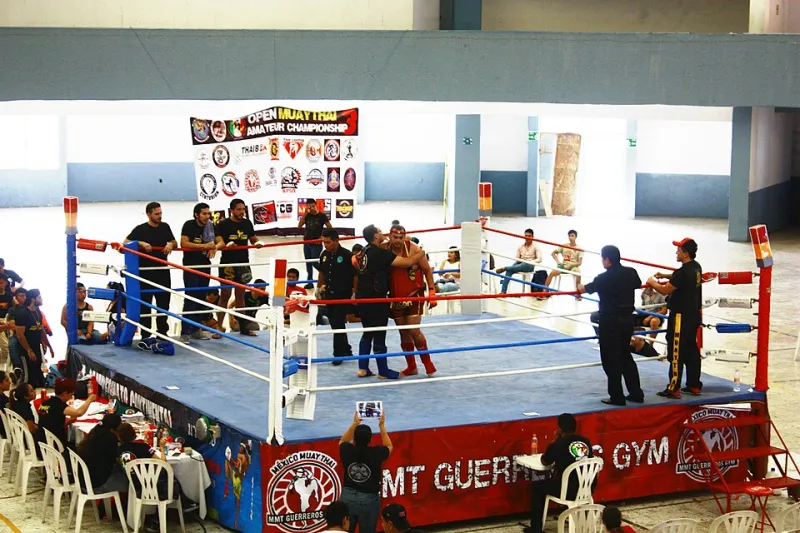
Photo: laKaeva, CC BY 2.0, via Wikimedia Commons
Somewhere between registering for your first amateur fight and the moment panic sets in, you'll be asked a question that sounds simple: "What weight do you want?"
If you're like most first-timers, you'll blurt out a number that's five to fifteen pounds below what you actually weigh. You'll do it because your training partner cut to 155. You'll do it because a lighter weight class sounds tougher. You'll do it because nobody told you there's a difference between what you weigh and what you can safely lose before someone tries to kick your legs off.
Let's fix that before you sign the bout agreement.
Find Your Real Walking Weight First
Your walking weight is what the scale says on a normal Tuesday — not after a weekend of eating clean, not dehydrated after a hard session, not bloated after a Fourth of July cookout. Weigh yourself first thing in the morning, after using the bathroom, before eating or drinking, for a week straight. Take the average.
That number is your baseline, and it matters more than your goal weight. If you walk around at 170, you're a 170-pound fighter who might make 165 comfortably. You are not a 155-pound fighter with a little extra to trim. There's a difference, and your body knows it even if your ego doesn't.
Also, be honest about what you're carrying. If you're a software guy in Austin who's never done a weight cut in his life, your body is going to respond to dehydration very differently than a college wrestler who's been cutting since junior year. Experience with cutting is a skill, and you don't have it yet.
Why 5-8 Pounds Is the Ceiling for Your First Fight
The experienced amateurs you see making 15- and 20-pound cuts didn't start there. They built up to it over years, learning how their bodies handle water manipulation, sodium loading, and the miserable 36 hours before weigh-ins.
You haven't earned that. And more importantly, you don't need it.
Here's what a big cut actually takes from you on fight night:
- Reduced power output. Studies on combat sports consistently show decreased performance after aggressive dehydration, even after rehydration.
- Worse durability. A dehydrated brain doesn't like being rattled. That's not a trade you want to make in your first fight.
- Zero margin for error. Miss weight and you're dealing with embarrassment, forfeited bouts, or a cancelled matchup — on top of everything else.
A modest cut of 5-8 pounds, mostly water, done over the final week, is manageable. You'll rehydrate overnight, eat a solid breakfast, and step into the ring feeling like yourself. That's the goal. Your first amateur fight should test your Muay Thai, not your kidneys.
There's also the simple math of experience. Amateur bouts are where you're supposed to learn. Showing up depleted to fight a stranger who made weight easily is how you learn bad lessons about gas tanks and chins.
The Awkward Coach Conversation
Sometimes the problem isn't you — it's the person holding the pads. Coaches sometimes push fighters down a weight class to chase an easier-looking matchup or to fill a card slot. If you're at 170 and your coach says "you'll make 155, no problem," you need to push back.
Here's how to do it without torching the relationship:
Lead with data, not fear. "Coach, I've been tracking my morning weight for a few weeks. I walk at 170-172. Cutting to 155 means losing 15-plus pounds. I don't have any cut experience. Can we look at 165 instead?"
Offer an alternative. Coaches respond better to solutions than refusals. Suggest a realistic class, or offer to prove it: do a practice cut for a smaller number first and see how you feel.
Name the actual stakes. "I'd rather show up strong at 165 than drained at 155. I want my first fight to go well so I can keep booking them."
A good coach will hear that. If they won't budge and there's no reasoning with them, that's information too. Your body is the one stepping through the ropes.
A Simple Decision Framework
Still unsure? Run your number through this:
- Walking weight minus fight weight = your cut. Under 8 pounds for a first fight: fine. Over 10: pick a different class.
- Have you ever cut weight before? No? Stay at the low end, or don't cut at all.
- How far out is the fight? Eight weeks gives you time to slowly drop a few pounds of actual body weight through diet. Two weeks means you're cutting water, period, and water cuts should stay small.
- Are you doing this to feel like a big fish? Fighting smaller opponents at a weight you starved to reach is a hollow win, and everyone in the building can tell.
Fight the Fight in Front of You
Nobody remembers what weight their favorite fighter debuted at. They remember whether the fight was good. Make weight at a class that lets you eat, sleep, and train like a human being, then go have a fun, sharp, competitive debut. The dramatic cuts can come later — after you've built the experience to survive them.
Train smart. The scale will still be there for your second fight.