Your Pad Holder Knows More Than You Think: The Hidden Skill Every Nak Muay Ignores
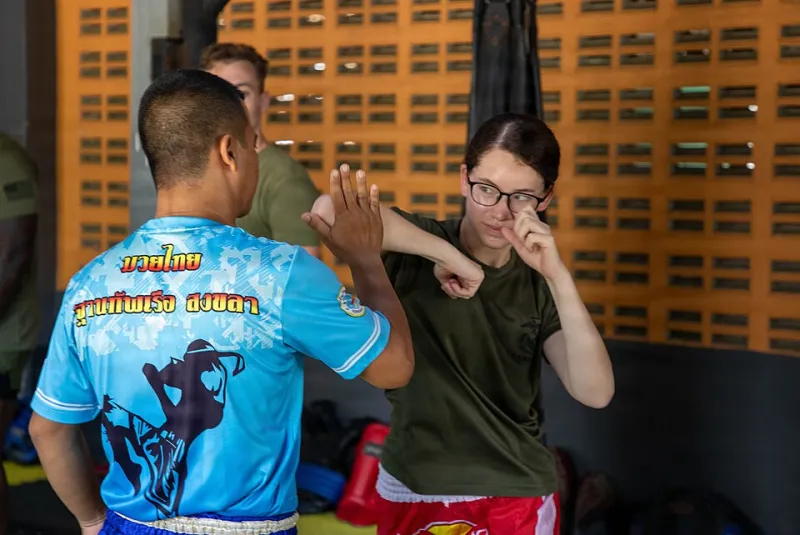
Photo: U.S. Navy photo by Petty Officer 1st Class Dakota David, Public domain, via Wikimedia Commons
Walk into most American Muay Thai gyms and watch what happens when the coach says 'grab a partner.' Everybody scrambles to be the one throwing. Nobody wants to hold.
That's a mistake, and not just a politeness mistake. The person wearing the pads is getting an education the person throwing them isn't — in distance, in timing, in what actually makes a shot land. If you're sleeping on your pad rounds, you're leaving half your development on the table.
You Learn the Fight From the Other Side
Here's the thing about holding Thai pads: you're standing where your opponent stands. You feel what a lazy teep looks like coming at you. You see the shoulder dip before a hook a half-second before it arrives. After a few hundred rounds on the receiving end, your brain builds a library of attacks — and that library transfers directly into your own defense and reads.
Heavy bags don't hit back. Bags don't shift their weight, check your rhythm, or drift out of range. A good pad holder does all of that. When they step in with a return strike, you're learning range the honest way — by getting close to getting hit.
This is why, in Thailand, pad holding is a craft, not a chore. The krau muay running pads is essentially choreographing a fight in real time, adjusting for the fighter's fatigue, style, and what's coming up on fight night. Compare that to a cardio kickboxing class where the 'pad work' is a partner holding gloves at chin height while you burn calories. One is training. The other is a workout with gloves on.
Know Your Pad Holder Archetypes
Spend enough time in gyms and you'll meet every flavor. A few you'll recognize:
The Drill Sergeant. Loud, demanding, calls every combination with authority. Great for intensity, occasionally guilty of running your arms into noodle territory by round three. If you get one of these, negotiate — tell them you need round three to look like round one.
The Phone Scroller. Pads drooping at their waist, eyes on Instagram between combos. This isn't pad work; it's shadowboxing against furniture. Politely ask for live hands and movement. If that doesn't work, rotate partners.
The King of Flow. This person moves, counters, changes levels, feeds you realistic reactions. Rounds with them feel like sparring with a safety net. When you find one, guard them like a parking spot downtown.
Aim to become the third one. Start by not being the second.
What Great Pad Rounds Teach That Bags Can't
A heavy bag gives you power development and conditioning — legit tools, no argument. But three things only come from a live human holding pads:
- Distance in real time. A bag doesn't step back as you range-finding with jabs. A pad holder does, and you learn to cut the ring and close space.
- Timing off reactions. When your holder fires back a hook after your combo, you learn to exit at an angle instead of standing there admiring your cross.
- Rhythm breaking. Good holders change the pace — slow, then explosive — which forces you to stay present instead of drilling on autopilot.
That third one matters more than people realize. Most gym rounds are metronomic: combo, combo, combo, same tempo forever. Fights aren't. A holder who messes with your rhythm is doing you a favor, even when it's annoying.
How to Be the Partner Everyone Wants
Being a great pad holder isn't complicated, but it takes intent:
- Hold with your body, not your arms. Absorb strikes by giving slightly with your hips and torso. Locked elbows equal tennis elbow by week three — yours and theirs.
- Actually watch the strikes. Your job is to present the target where the shot would land, not to guess. Watch the shoulder, meet the punch, return the kick with a little push so the fighter resets balanced.
- Feed reactions. After a combo, throw a slow return strike 30% speed. Let them practice the slip or the check. You just turned a cardio round into a fight round.
- Talk. 'That teep was falling short.' 'Your hands dropped on the exit.' You don't need to be a coach to give one honest observation a round.
- Match the intensity. A beginner needs encouragement and simple calls. A fight camper needs pace and pressure. Read the room.
Flip the Script
Next time class pairs off, volunteer to hold first. Treat those rounds like skill work instead of a break. Watch your partner's hips, their entries, their exits. Ask your coach to critique your holding — seriously, they'll be thrilled someone asked.
Within a couple of months, you'll notice it in your own rounds: better range, calmer defense, sharper reads. The art of eight limbs includes the two you use to hold the pads. Use them well.