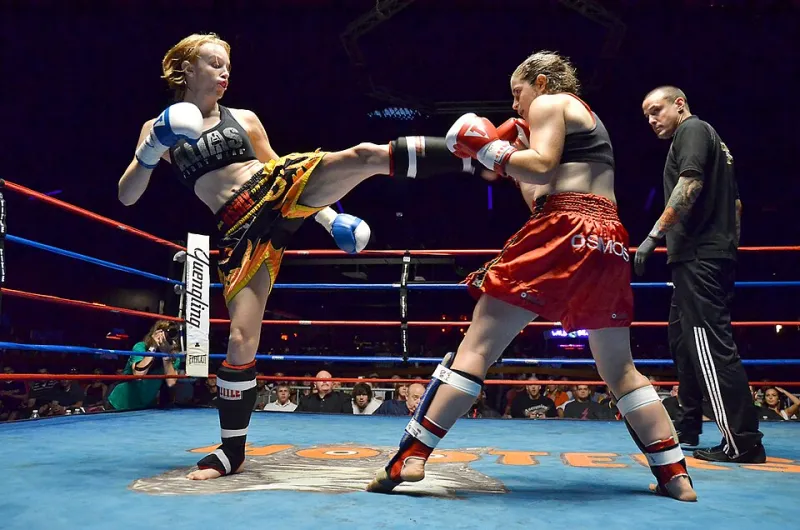
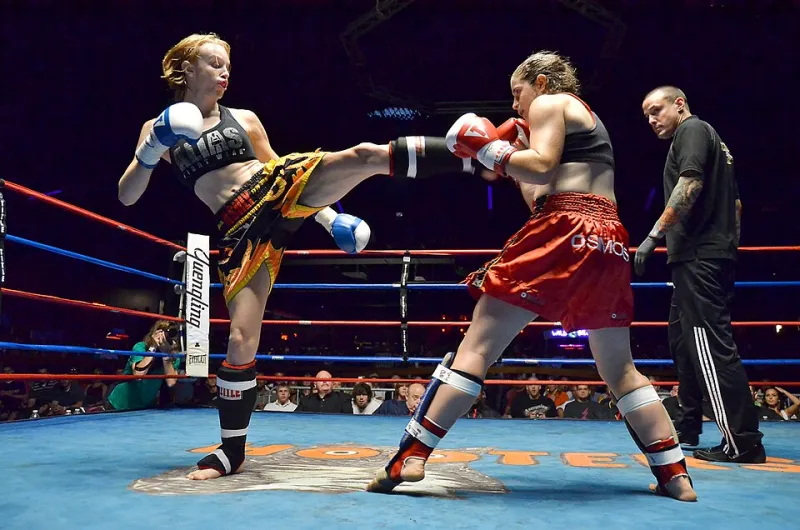
Round One Is Your Scouting Report: How to Read a Stranger Before the Damage Adds Up
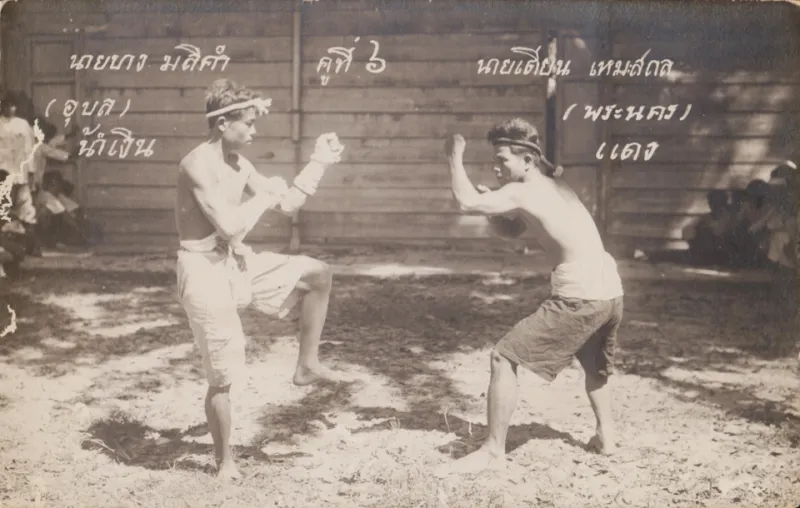
Photo: Unknown authorUnknown author, Public domain, via Wikimedia Commons
In boxing, you've usually watched your opponent's tape. In BJJ, you might've shared a bracket with the guy at three other tournaments. In amateur Muay Thai in America? Half the time you're staring across the ring at a complete stranger — no footage, no mutual friends who've sparred with him, nothing.
That's not a disadvantage. That's just a different skill to train.
The best nak muay treat the first round like a lab session that happens to include punches. While you're under fire, you're also collecting data. Here's how to actually do that without getting flattened in the process.
Start With a Question, Not a Statement
The single biggest mistake beginners make is coming out in round one with a fixed game plan and running it blind. You're not answering a question — you're ignoring one. The question is: what does this person actually do?
Answer it cheaply. A soft, low-commitment jab isn't there to hurt anyone; it's there to see what happens. Does he shell? Pull back?Swipe at it and step in? Every reaction tells you something about range, comfort, and habits.
A southpaw coach I talked to in Texas put it bluntly: "The first ninety seconds, I'm not trying to win. I'm trying to get an invoice of what they owe me later."
The Tell List: What to Clock Early
Some things show up fast if you're looking:
- The dropped lead hand. Classic amateur tell. If his lead hand keeps sagging after he throws, he's telegraphing his own rhythm — and leaving a lane for your cross or a switch kick.
- Weight distribution. Heavy on the front leg? That's a low-kick invitation. Constantly shifting? Time a teep or sweep as the weight transfers.
- The exit route. Everyone has a default escape after throwing combinations. Most amateurs step straight back. Straight lines are predictable lines — angle off and make him whiff at air.
- Guard height under pressure. Some guys look tight until you force them to throw. A busy round reveals whether the hands drop when they're tired or frustrated.
None of this requires fight IQ you don't have. It requires looking instead of just reacting.
Timing Patterns: Minute Two Is the Money Minute
By the halfway point of round one, most amateur fighters have shown you their favorite dish. People under adrenaline are creatures of habit: jab-cross every time you step in, or a check hook after your combo, or that leg kick they've thrown six times already.
Start counting. Not literally — but notice. If he's thrown the same three-strike sequence four times, the fifth one is your counter window. Load the intercepting knee. Sit on that low kick. The pattern he thinks is his strength becomes your timing drill.
Between Rounds: The 60-Second Staff Meeting
Here's where amateur Muay Thai in the US has a secret weapon: your corner. You get a minute with someone who's watching the fight instead of surviving it.
Make your corner's job easy by telling them before the fight what to watch for — lead hand, exits, whether you're eating the same kick repeatedly. Then in the break, keep it to two or three concrete fixes. "Stop walking back straight." "Catch and return that jab." "He's cold to the body — go there."
Vague corner advice like "be first, be hard" is noise. Specific observations are ammunition.
Adjust Without Overcorrecting
One trap worth naming: reading too much into round one. Maybe he was nervous. Maybe he was told to feel you out too. If round two looks different, re-read. Reconnaissance isn't a one-time audit — it runs the whole fight.
The goal isn't a perfect scouting report. It's staying curious while you compete. Fighters who keep asking questions in rounds three, four, and five are the ones who find answers their opponents never saw coming.
Train It in the Gym, Not Just the Ring
You can't flip a switch and become observant under fire. So build it into sparring. Once a week, spar one round where your only goal is information: no heavy shots, just tests and observation. Call out what you notice between rounds with your partner. It feels awkward for about two rounds, then it becomes automatic.
Fight day in America hands you a stranger and eight limbs each. The fighter who treats round one as a conversation — instead of a shouting match — usually writes the ending.